Beyond the Screen: Why Premium Studios Are Building What They Used to Present

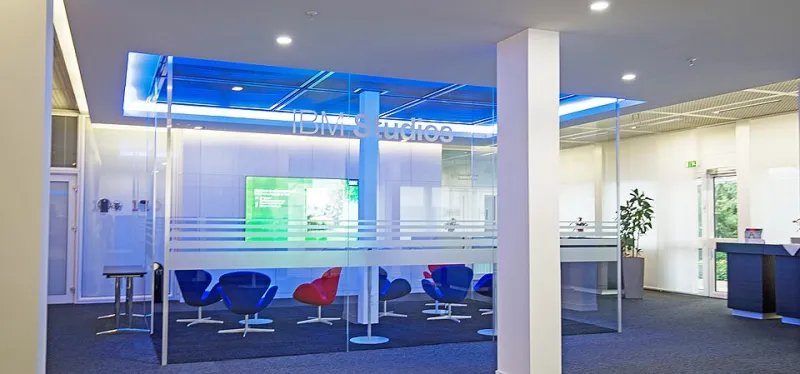
Photo: Елена Нечипоренко, CC BY-SA 4.0, via Wikimedia Commons
For decades, the mood board served as the creative industry's handshake—a curated grid of images, color swatches, and typographic samples assembled to communicate a vision before it fully existed. It was efficient, scalable, and almost universally accepted. It was also, as a growing number of studios now argue, fundamentally insufficient.
Across the United States, a quiet but consequential shift is underway. Premium creative studios are dismantling the traditional presentation model and replacing it with something that cannot be scrolled past or dismissed with a single click: physical space, built to be experienced.
The Limits of the Pixel
The problem with digital presentations has never been the quality of the imagery. Contemporary design tools allow studios to render environments, products, and brand systems with extraordinary fidelity. The issue is cognitive distance. When a client views a mood board on a laptop screen in a conference room, they are evaluating an abstraction. They are asked to project themselves into a space or a brand identity that does not yet exist, using a medium that filters out texture, scale, ambient light, and the full range of sensory information that shapes genuine emotional response.
This gap between presentation and reality is where misaligned expectations are born. A client approves a color palette on a monitor calibrated to studio specifications, only to encounter that same palette printed on packaging under warehouse fluorescents and find it unrecognizable. An architectural signage system looks bold in a mockup file but feels oppressive when rendered at full scale. These are not failures of design. They are failures of communication.
Studios that have recognized this disconnect are not simply improving their presentation software. They are rethinking the entire pre-production conversation.
Spatial Storytelling as a Studio Discipline
The practice of building immersive physical prototypes before client approval is not entirely new—it has roots in theatrical set design, retail fixture development, and museum exhibition planning. What is new is its deliberate adoption by commercial creative studios as a standard client engagement tool, rather than a specialty service reserved for the largest accounts.
Leading studios operating in markets from New York to Los Angeles have begun allocating dedicated square footage within their facilities for what some are calling "proof-of-concept environments." These are not finished installations. They are honest, intentional constructions—a section of a proposed retail environment built at one-quarter scale using actual materials, or a brand identity applied to physical touchpoints arranged in a sequence that mirrors a real customer journey. The goal is not to simulate the final outcome perfectly. It is to give the client something genuine to react to.
The distinction matters. When a client stands in front of a physical object—touches a substrate, observes how light interacts with a surface, walks through a spatial arrangement—their feedback changes in character. It becomes more specific, more confident, and more actionable. Vague approval gives way to directed dialogue. The studio gains better information. The client gains greater ownership of the outcome.
The ROI Argument
The financial case for investing in physical prototyping is more compelling than it might initially appear. The upfront cost of constructing a spatial mockup or fabricating a physical prototype is real and should not be minimized. Materials, fabrication time, and studio space all carry a price. For smaller projects, the math may not support the investment.
However, for mid-to-large-scale commercial engagements—retail rollouts, brand identity systems, environmental design programs, product launch campaigns—the cost of a pre-production revision cycle prompted by a misaligned approval is almost always greater than the cost of a prototype. Industry practitioners who have adopted this model consistently report reductions in late-stage change requests, shortened final approval timelines, and measurable improvements in client satisfaction scores.
Beyond the per-project economics, there is a longer-term brand argument. Studios that offer physical prototyping as part of their engagement model are positioning themselves in a distinct tier of the market. They are communicating, through the very structure of their process, that they take production outcomes seriously enough to invest in them before a single invoice for fabrication has been issued. That positioning commands premium pricing and tends to attract clients who are themselves serious about quality.
Changing What Clients Expect
Perhaps the most significant consequence of this shift is not what it does for individual projects but what it does to client expectations across the industry. When a brand director at a major consumer goods company experiences a physical prototype presentation for the first time, their standard for what a creative studio engagement should feel like is permanently recalibrated.
They begin to ask different questions when evaluating future studio partners. They want to know how a studio will help them understand a design decision, not merely approve it. They become skeptical of presentations that rely entirely on rendered imagery. They start to associate the willingness to build with the willingness to be accountable.
This expectation shift is already visible in how requests for proposals are being written by sophisticated clients in sectors including consumer retail, hospitality, and corporate real estate. The language around "concept validation" and "pre-production alignment" is appearing with greater frequency, signaling that the market is beginning to formalize what forward-thinking studios have been practicing informally.
The Creative Philosophy Underneath
At its foundation, the move toward physical prototyping reflects a particular philosophy about the relationship between a studio and its clients. It rejects the transactional model in which the studio produces and the client reacts, in favor of a collaborative model in which both parties develop understanding together through shared experience.
Building something—even something temporary, even something rough—is an act of commitment. It signals that the studio believes in its own ideas enough to materialize them. It invites the client into the creative process not as an audience member but as a participant. And it establishes, from the earliest stages of a project, that the measure of success is not an approved file but a realized outcome.
For studios committed to crafting visuals that captivate and endure, the question is no longer whether physical engagement belongs in the creative process. It is how to integrate it with the precision and intentionality that defines the work itself.